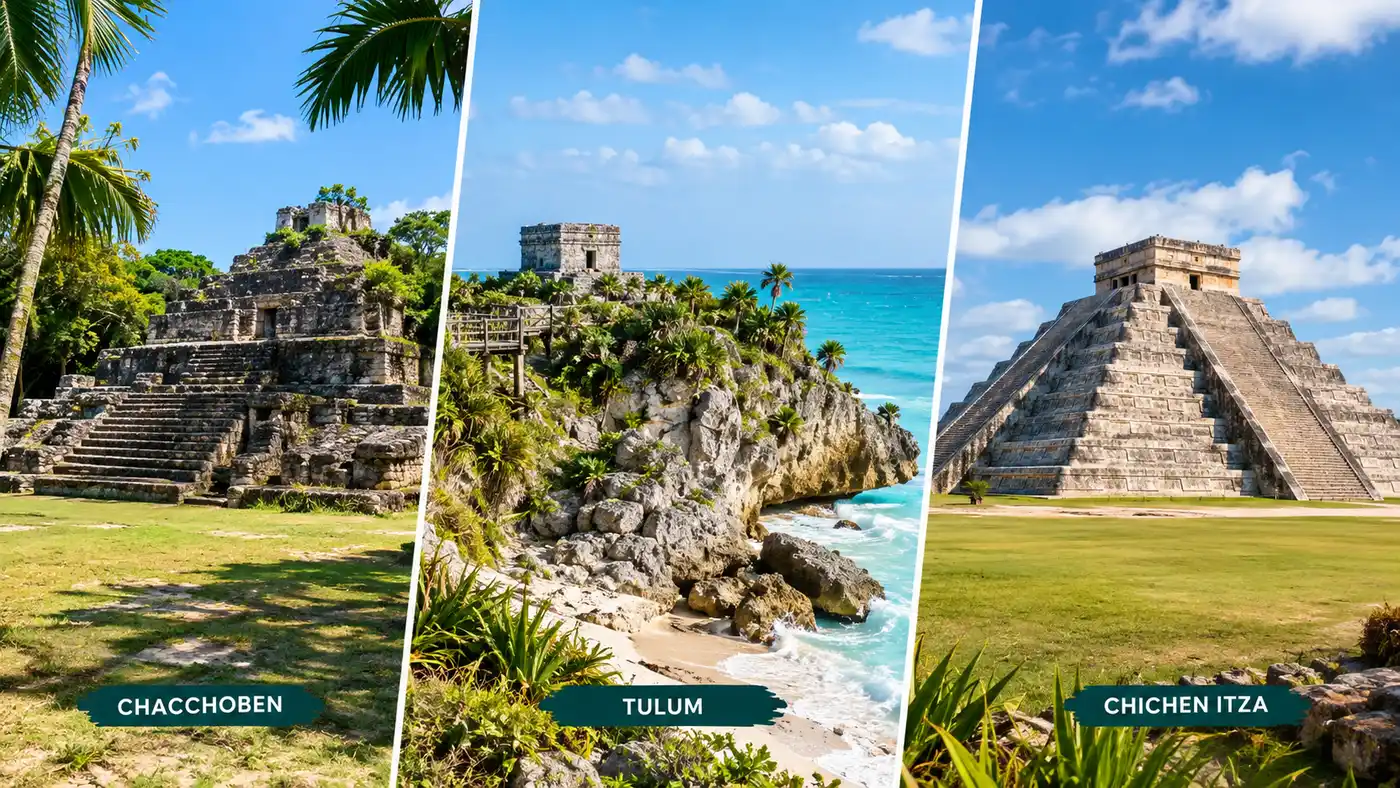
Chacchoben vs Tulum and Chichen Itza
Everyone arrives on the Yucatan peninsula thinking all ancient stone structures are pretty much the same. You see one stepped pyramid, you take a photo with a sweaty forehead, you buy an overpriced carved trinket, and you head back to the beach. When you are standing in a cruise terminal or hotel lobby weighing chacchoben mayan ruins vs tulum, or wondering if you should endure a four-hour bus ride inland to Chichen Itza, the differences suddenly hit you. Each site delivers a completely distinct experience. Pick the wrong one and you might spend six hours stuck in traffic just to stare at the back of someone else's sun hat.
The choice between these sites usually comes down to three things: where your trip starts, how much direct sunlight you can tolerate, and whether you prefer dramatic Caribbean ocean views or quiet jungle paths where howler monkeys swing through the trees. Having walked the dusty trails of all three places multiple times over the last decade, I can tell you that bigger does not always mean better. Sometimes the smaller, quieter site gives you the exact ancient feeling you were chasing in the first place.
Book your chacchoben mayan ruins experience:
Atmosphere and Setting: Jungle Canopy vs Cliffside Caribbean
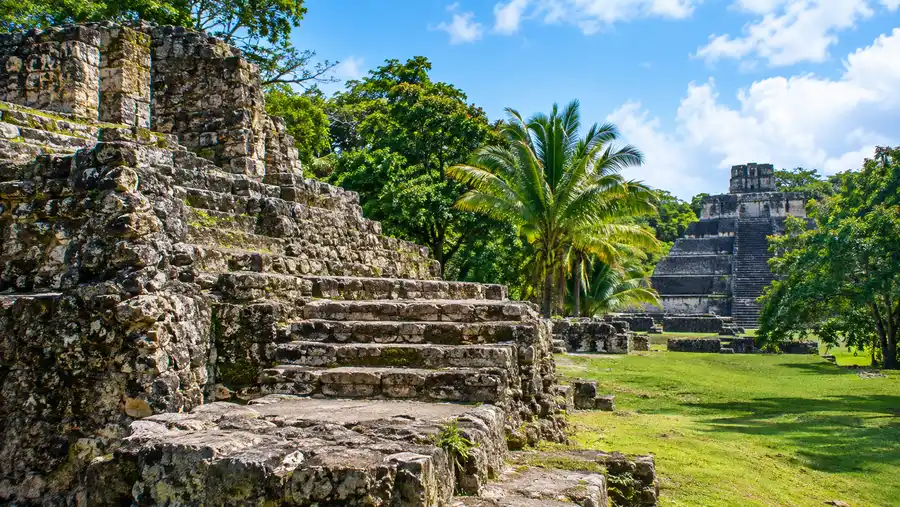
The environment around these ancient cities shapes your visit more than the architecture itself. Chacchoben sits buried deep inside the southern Quintana Roo jungle, surrounded by towering Cohune palms and zapote trees. The canopy filters the intense midday sun. It stays remarkably quiet there. You hear rustling leaves, the sudden screech of parrots, and the occasional branch snapping as a troop of spider monkeys moves through the high limbs above Temple 24. It feels undiscovered, even though tour vans pull up every morning.
Tulum offers something radically different. Perched directly atop twelve-meter limestone cliffs overlooking the Caribbean Sea, it delivers the kind of turquoise water visuals that make travel magazines sell out on newsstands. The setting is pure drama. There is almost zero shade across the entire archaeological zone, which means the sun beats down on your neck without mercy from nine in the morning until late afternoon. The sea breeze helps, but by noon the humidity and crushed-limestone glare can wear down even the most energetic travelers.
Then you have Chichen Itza, which dominates a vast, cleared interior plain in Yucatan state. The site is massive, flat, and largely open to the sky. You walk along broad sacbeob - ancient paved white limestone roads - between colossal structures like El Castillo and the Great Ball Court. It feels civic, imperial, and deeply organized. The sheer scale is staggering, but you share that grandeur with roughly 7,000 other people on any given weekday, surrounded by hundreds of licensed vendors blowing wooden jaguar whistles that echo across the plazas.
Note: Wooden jaguar whistles are sold aggressively throughout Chichen Itza. If you are sensitive to repetitive, loud noises, bring earplugs or prepare yourself for non-stop roaring sounds echoing off the stone temples.
Chacchoben Mayan Ruins vs Chichen Itza: Scale, Wonder, and Distance
The debate between history and architecture of the Chacchoben ruins and the sheer wonder of Chichen Itza boils down to personal stamina. When people compare chacchoben mayan ruins vs chichen itza, they are contrasting an intimate regional ceremonial center with an imperial superpower. Chichen Itza was a sprawling metropolis that controlled trade networks across Mesoamerica. The precision of El Castillo, built so that a feathered serpent shadow slithers down the pyramid balustrade during the spring and autumn equinoxes, is an astronomical feat that Chacchoben cannot match.
Chichen Itza demands a full day of effort. If you are docking at Costa Maya, visiting Chichen Itza is essentially out of the question because the one-way drive takes roughly five hours. Even from Cancun or Playa del Carmen, you must commit to an early wake-up call and at least six hours of round-trip highway driving. You will walk three to four miles in blistering heat. Is it magnificent? Absolutely. It made the New Seven Wonders of the World list for good reason. The Great Ball Court alone, with its eerie acoustic anomalies and vivid low-relief carvings of decapitated ball players, is worth seeing at least once in your lifetime.
Comparing chichen itza mayan ruins vs chacchoben mayan ruins from a practical standpoint reveals why so many cruise passengers and slow travelers end up loving Chacchoben. At Chacchoben, you walk along soft dirt trails shaded by breadnut trees. The site takes about 90 minutes to explore thoroughly, covering around a mile of gentle walking. You do not need to rush from monument to monument. You can sit on a bench carved from a fallen log, look up at the moss-covered tiers of the Gran Basamento, and actually absorb where you are. If you have small children, mobility limitations, or simply hate elbowing strangers for a clear photo, choosing chacchoben mayan ruins or chichen itza becomes an easy decision favoring the jungle.
| Feature | Chacchoben | Tulum | Chichen Itza |
|---|---|---|---|
| Setting | Lush, shaded tropical jungle | Coastal clifftop over Caribbean | Open, cleared limestone savannah |
| Crowd Level | Low to moderate | Very high | Extremely high |
| Time Needed on Site | 1.5 to 2 hours | 2 hours | 3 to 5 hours |
| Shade Coverage | Around 75% shaded | Under 10% shaded | Around 20% shaded |
| Drive from Costa Maya | 50 minutes | 2.5 hours | 4.5 to 5 hours (not feasible) |
| Drive from Playa del Carmen | 3 hours | 50 minutes | 2.5 hours |
| Climbing Allowed | Select lower platforms only | None (strictly roped off) | None (strictly roped off) |
Chacchoben Mayan Ruins vs Tulum: Deciding Between the Two
If you are trying to resolve the chacchoben mayan ruins vs tulum dilemma, you are likely staying along the southern Riviera Maya or arriving on a ship at Costa Maya. Both sites sit within striking distance of coastal ports, yet they offer polar opposite visits. Travelers constantly search for chacchoben or talum mayan ruins looking for the most picturesque backdrop. Tulum wins on pure visual contrast because gray stone set against electric-cyan water looks incredible in photographs. That beauty draws crowds that choke the narrow walking paths between the temples.
Tulum was a late Postclassic fortified trading port. Because it was built near the twilight of Mayan dominance - still inhabited when Spanish ships first drifted past in 1518 - the masonry work is noticeably cruder than classic sites. The buildings are relatively squat, constructed with thick coats of stucco to hide irregular stones. You cannot approach the temples closely. Everything is bordered by thick ropes to protect the fragile coastal bluffs and preserve the foundations from foot traffic. You follow a single directional path, often stepping to the side to let twenty-person tour groups file past.
Pro tip: If you visit Tulum, enter the gate at 8:00 AM sharp when tickets go on sale. By 9:30 AM, the tour buses from the big all-inclusive resorts arrive and queue up 50 people deep at the clifftop overlooks.
When asking which mayan ruin is better tulum or chacchoben, think about what kind of memory you want. Chacchoben feels like an expedition. The ruins date back to 200 BC, meaning the ceremonial architecture here carries classic Peten-style influence with steep central stairways and rounded pyramidal corners. The stones are weathered, half-swallowed by the roots of strangler figs. You can walk right up to the base of the temples, touch the limestone blocks, and examine traces of the original red pigment that coated the stucco two thousand years ago. There are no ropes keeping you fifty feet away from the structures.
Tulum allows you to combine ruins with a swim, assuming the wooden staircase down to the beach below the Castillo is open. Sometimes rough surf or heavy sargassum weed closes the beach access, which eliminates one of Tulum's biggest perks. Chacchoben has no beach on site, though you are only thirty minutes from the fresh, cool waters of Lake Bacalar if you rent a car or book a combination tour.
Book your chacchoben mayan ruins experience:
Logistics, Costs, and Cruise Port Timing
Your port of arrival or resort base dictates your choices faster than personal preference. Cruise passengers pulling into Costa Maya often wonder about taking an excursion north toward Tulum. It is technically possible on a private charter, but you will spend five hours round-trip staring out of a van window on Highway 307. That leaves very little margin for error if you hit road construction or police checkpoints. Learning how to get from Costa Maya port to Chacchoben is far more practical since the ruins are located just 45 miles west of the docks.
A taxi or guided transfer to Chacchoben from Costa Maya takes about 50 minutes each way along a well-paved two-lane highway. You spend less time sitting in a vehicle and more time walking under the trees. The site entrance fee is roughly $5 to $6 USD (around 95 to 105 Mexican pesos) if you visit independently, though cruise ship excursions bundled with transportation, lunch, and a bilingual guide usually range between $85 and $125 per person. Tulum costs slightly more due to municipal park access fees, and Chichen Itza carries a steep state tax bringing total admission closer to $38 USD per adult.
- Cruise time buffers: Always allow at least two full hours between your expected return to the port area and the ship's all-aboard call.
- Cash requirements: Bring Mexican pesos for entrance fees and small purchases because card readers frequently lose cellular signal at Chacchoben and inland checkpoints.
- Local guide hire: Licensed INAH guides stand right outside the ticket booths at all three sites, charging roughly $40 to $65 for private groups up to six people.
- Footwear choices: Wear sturdy trail runners or running shoes with good grip rather than flip-flops, as humid limestone turns slick as ice when wet.
If your cruise docks in Cozumel, Tulum becomes slightly more accessible because you can take the 45-minute passenger ferry across to Playa del Carmen, followed by a 50-minute van ride south. Doing that on your own requires careful clock-watching. Missing a ferry connection means watching your cruise ship sail away without you into the dusk.
Who Each Mayan Ruin Is Actually Best For
There is no universally superior choice. The right answer depends entirely on your travel group, your threshold for heat, and how you feel about sharing ancient spaces with hundreds of tour groups. I have taken history buffs to Chichen Itza who were brought to tears by the architecture, and I have taken families to the same spot who begged to leave after 45 minutes because the children melted down under the midday heat.
- Choose Chacchoben if: You crave peace, dense jungle foliage, easy walking terrain, native wildlife sightings, and an unhurried morning close to the Costa Maya port.
- Choose Tulum if: You want dramatic Caribbean ocean views, iconic photography angles, and the ability to pair your ruin visit with a trendy lunch in town or a swim.
- Choose Chichen Itza if: You are an architectural enthusiast determined to check a New Seven Wonders landmark off your bucket list, regardless of the crowds and long drive.
Travelers who hate crowds should cross Chichen Itza off their list immediately unless they can sleep at an adjacent hotel and enter the turnstiles at 8:00 AM. Similarly, photographers hunting for moody jungle scenes with green moss and tangled vine roots will find Tulum sterile by comparison. Tulum has manicured grass lawns between structures, kept short by maintenance crews and resident iguanas that sunbathe on the foundations.
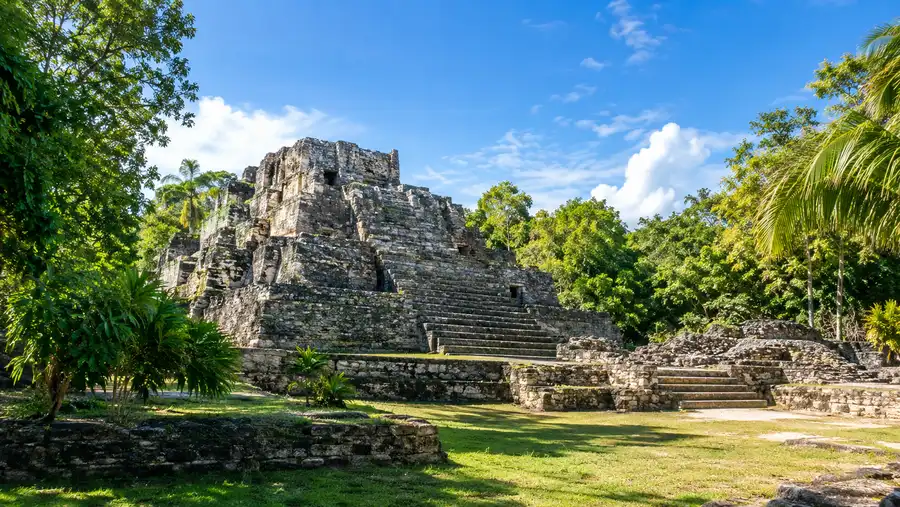
Chacchoben maintains that sense of romantic archaeology that people dream about when thinking of Central America. It feels like an ancient community nestled safely away from modern coastal development. Walking through the Plaza of the Stelae, looking up at the high temples poking through the jungle canopy, you genuinely get a quiet second to imagine what life felt like here during the Maya Classic period.
Frequently Asked Questions about chacchoben mayan ruins vs tulum
Can you climb the pyramids at Chacchoben, Tulum, or Chichen Itza?
You cannot climb the main pyramids at any of these sites anymore. INAH roped off El Castillo at Chichen Itza back in 2006, and Tulum has strict cordons everywhere. Chacchoben allows visitors to climb a few low stone staircases leading up to elevated courtyard plazas, but the monumental temples themselves are strictly off-limits to prevent stone erosion.
Which site is best for spotting wild animals?
Chacchoben is significantly better for wildlife than Tulum or Chichen Itza. Because Chacchoben sits inside an active jungle reserve, visitors frequently spot spider monkeys, coatis, toucans, and large iguanas. Tulum is famous mostly for large black iguanas sunning on the cliffs, while Chichen Itza has far too much foot traffic to support visible wildlife.
Is Tulum or Chacchoben closer to the Costa Maya cruise terminal?
Chacchoben is much closer. It is located roughly 45 miles west of the port of Costa Maya, requiring a straightforward 50-minute drive. Tulum sits roughly 135 miles north along Highway 307, requiring at least two and a half hours of driving each way, which makes it an unrealistic day trip for most port schedules.
Quick Reference
- Chacchoben: 50 minutes from Costa Maya, heavy jungle shade, low crowds.
- Tulum: 50 minutes from Playa del Carmen, coastal ocean views, very high crowds.
- Chichen Itza: 2.5 hours from Cancun, world-wonder architecture, minimal shade.
- Wildlife winner: Chacchoben (spider monkeys, tropical birds, coatis).
Book your chacchoben mayan ruins experience:
The Bottom Line
If your journey brings you to the southern stretch of Quintana Roo, do not feel like you are missing out by choosing Chacchoben over the famous northern sites. Chichen Itza is a marvel of ancient engineering, and Tulum offers views you will never forget, but Chacchoben delivers tranquility and atmosphere that neither of the big names can match. Book an early morning tour, bring along a bottle of water and decent walking shoes, and enjoy having the jungle canopy mostly to yourself.
Read more about chacchoben mayan ruins.